

The early 90s were packed with mascot platformers. After Sonic the Hedgehog became a huge success for Sega, it seemed like every publisher wanted their own animal mascot capable of launching a franchise. Some became household names, while others faded into obscurity almost as quickly as they arrived.
Aero the Acro-Bat falls firmly into the latter category.
Released for the Mega Drive and Super Nintendo in 1993, Aero starred a circus-performing bat tasked with stopping the evil industrialist Edgar Ektor. It’s a premise that certainly stands out, but while the game has some interesting ideas, it never quite reaches the heights of the genre’s biggest stars.
More Than Just Running and Jumping
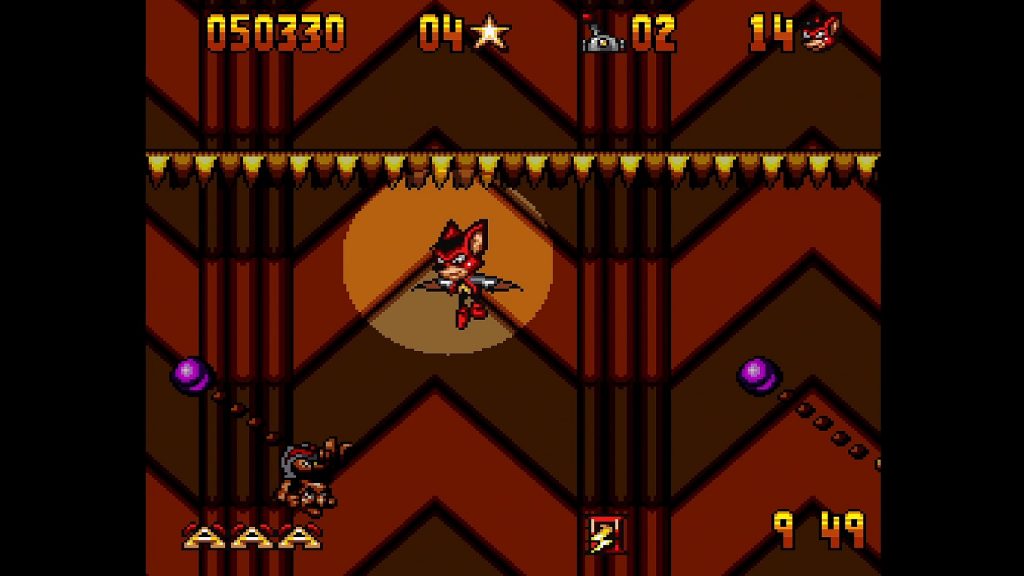
Unlike many platformers of the era, Aero the Acro-Bat places a stronger emphasis on objectives. Rather than simply reaching the end of each level, players are often tasked with activating switches, passing through hoops or interacting with specific objects before progressing.
It’s an interesting approach that helps the game stand apart from its competitors, but it can also be frustrating. Objectives are sometimes poorly explained, leaving players wandering around levels searching for the one thing they missed.
Aero himself controls reasonably well. His ability to glide and perform aerial attacks suits the character and offers more flexibility than a standard jump. Unfortunately, some stages feel designed around trial and error rather than skill, resulting in a few moments where frustration starts to outweigh enjoyment.
Level design is similarly mixed. Some stages feature clever ideas and memorable set pieces, while others drag on longer than they should. The difficulty can also spike unexpectedly, particularly later in the game.
Plenty of Style, Not Quite Enough Substance
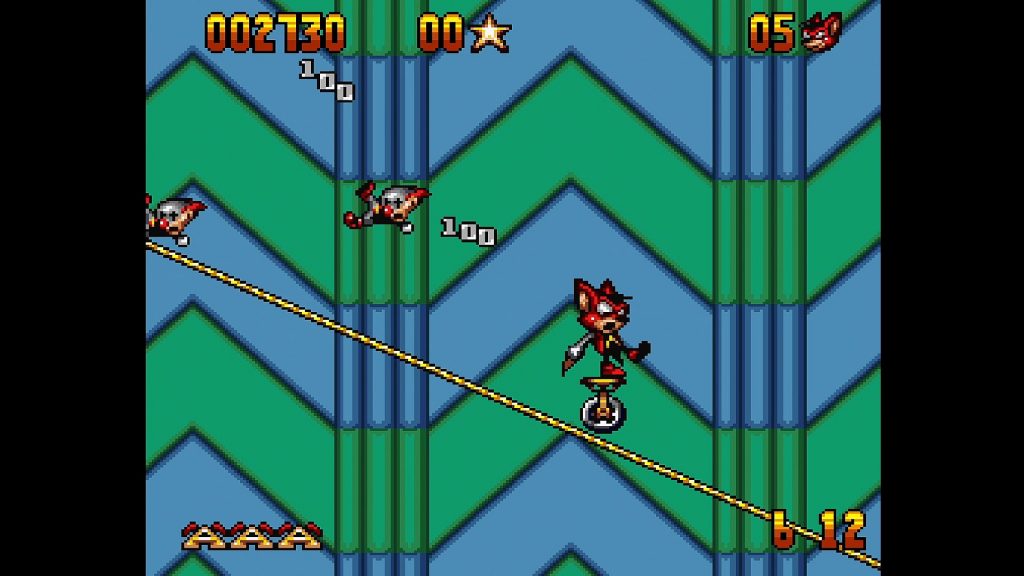
Visually, Aero the Acro-Bat is a colourful and attractive game. Character sprites are large and detailed, animations are smooth, and the circus-inspired theme helps give the game its own identity.
The soundtrack is perfectly serviceable too. While there are a handful of catchy tunes, few tracks are likely to stick with players long after they’ve put the controller down.
Perhaps the biggest issue is that Aero never truly excels in any one area. It’s competent across the board, but when compared to platforming giants like Sonic the Hedgehog, Rocket Knight Adventures or Disney’s Castle of Illusion, it struggles to stand out.
That’s not to say it’s a bad game. Far from it. There are plenty of enjoyable moments throughout the adventure, and players looking to explore beyond the Mega Drive’s biggest hits may find a hidden gem. It’s simply difficult to shake the feeling that you’ve played better versions of most of its ideas elsewhere.