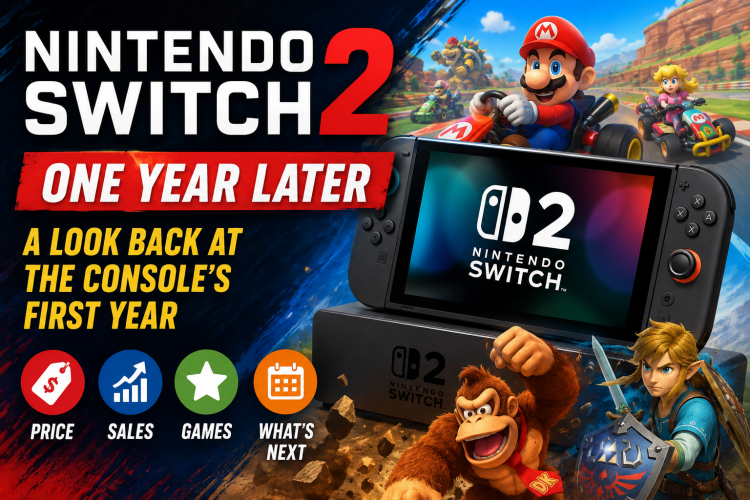
When Nintendo finally pulled back the curtain on the Switch 2, the reaction was mixed. Some players expected a radical reinvention. Others simply wanted a more powerful version of the console they already loved. One year later, it feels safe to say Nintendo made the right call.
The original Switch had become one of the most successful gaming systems ever made. Replacing it with something completely different would have been a huge gamble. Instead, Nintendo refined the formula. The result is a console that feels familiar, yet noticeably more capable in almost every area.
More importantly, the Switch 2 has enjoyed the kind of first year most hardware manufacturers can only dream about.
A Price That Sparked Debate
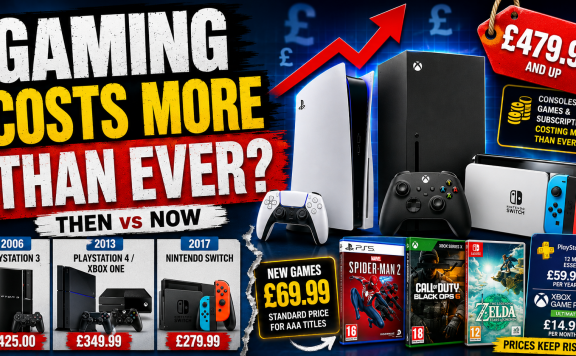
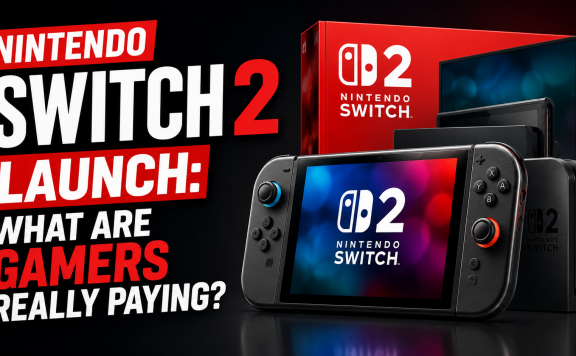
At launch, the Nintendo Switch 2 arrived with a price tag of £400 in the United Kingdom, making it significantly more expensive than the original Switch was back in 2017. Nintendo also raised eyebrows with some software prices, with Mario Kart World launching at £69.99. Costing more than many AAA releases on other consoles.
There was no shortage of discussion online. Some fans questioned whether Nintendo was pushing its luck, particularly during a period when gaming hardware, subscriptions and software prices seemed to be increasing across the board.
Yet the concerns didn’t last long.
The reality was that consumers were willing to pay for a system that offered a clear upgrade. A larger screen, improved performance, enhanced backwards compatibility and modern features helped justify the higher asking price. Once players got the console into their hands, the conversation quickly shifted from cost to availability.
Record-Breaking Sales
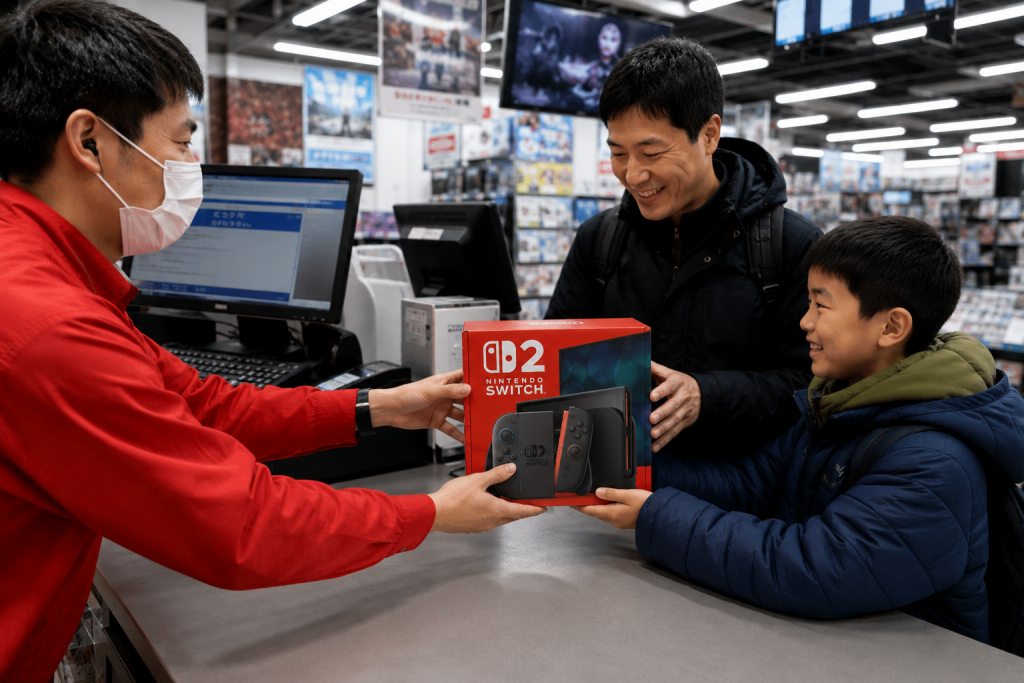
The Switch 2 didn’t just launch well. It launched at a historic pace.
Nintendo confirmed that the console sold more than 3.5 million units worldwide within its first four days on sale, making it the fastest-selling system in the company’s history.
Momentum continued throughout the year. By March 2026, Nintendo had shipped nearly 20 million consoles worldwide. The system reached 19.86 million units in less than a year, significantly outpacing the original Switch over the same period.
Perhaps most impressive is that the success wasn’t limited to one region. The Switch 2 performed strongly across North America, Europe and Japan, demonstrating that Nintendo’s hybrid concept still resonates with players around the world.
Considering how difficult it is to launch new gaming hardware in today’s market, those numbers are remarkable.
The Games That Defined Year One
Every successful console needs software, and Nintendo understood that from day one.
Mario Kart World became the system’s flagship title. It was bundled with many consoles and quickly established itself as the must-have game for early adopters. By early 2026, it had sold an astonishing 14.7 million copies.
Nintendo followed that up with Donkey Kong Bananza, which gave the company another major exclusive during the system’s first year. The game helped maintain momentum after launch and proved that Nintendo still knows how to reinvent its classic characters. Sales quickly climbed past 4.5 million copies.
Pokémon also played an important role. Pokémon Legends: Z-A and Pokémon Pokopia gave Switch 2 owners more reasons to stay invested in the platform, while upgraded versions of existing Switch games helped fill out the library.
Third-party support was another encouraging sign. Cyberpunk 2077 became one of the standout launch titles, showing that developers were willing to bring more technically demanding games to Nintendo hardware than ever before.
That may end up being one of the most important developments of the entire generation.
Looking Beyond the Launch Window
A great launch year is one thing. Sustaining that success is another challenge entirely.
Fortunately, Nintendo’s future release schedule looks promising.
Recent Nintendo Direct presentations have revealed a steady pipeline of software that should keep the system healthy well into 2027. Upcoming releases include a remake of The Legend of Zelda: Ocarina of Time, a new Fire Emblem, FromSoftware’s The Duskbloods, Xenoblade Genesis and several other high-profile projects.
Nintendo also appears to be investing heavily in its biggest franchises. Mario, Zelda, Pokémon, Donkey Kong and Kirby have all received attention during the console’s opening year, giving the platform a strong foundation.
The company doesn’t need to reinvent the wheel every few months. It simply needs to maintain a steady flow of quality software, something it has become increasingly good at over the past decade.
A Strong Foundation for the Future
The first year of the Nintendo Switch 2 has been an impressive success story. While the hardware isn’t revolutionary in the way the Wii or DS once were. Instead, it represents something arguably more valuable: confidence. Nintendo understood exactly what players liked about the original Switch and focused on improving those strengths.
The sales figures suggest that decision has paid off.
Nearly 20 million consoles sold in under a year is an extraordinary achievement. The software library already contains several standout titles, third-party support is stronger than many expected, and the release calendar continues to grow.
One year in, the Switch 2 feels less like a risky successor and more like the natural next step in Nintendo’s evolution.
If Nintendo can maintain this momentum, the system’s first year may end up being remembered not as the peak of its success, but as the beginning of something much bigger.