
If you’ve been feeling like gaming is getting more expensive recently. You’re definitely not alone. It’s not just the cost of buying a new console anymore, but also the games, subscriptions, accessories, and even mid-generation upgrades that all seem to add up faster than they used to. Between rising launch prices, £70 games becoming the norm, and services like Game Pass and PS Plus creeping up in price, keeping up with modern gaming can feel like a pricey hobby.
But is this really a new problem, or has gaming always been expensive in one way or another?
Console prices: then vs now
This current generation certainly arrived with some hefty price tags attached. So before we start let us take a look at the launch prices for the current crop of home consoles.
- The PlayStation 5 disc version launched in 2020 at $499/£429 or $399/£359 for the Digital Edition.
- The Xbox Series X also launched in 2020 at $499/£449, with the Series S coming in at $299/£249.
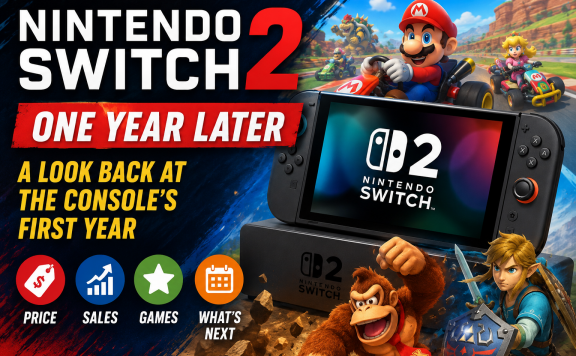
- Nintendo’s Switch launched in 2017 at $299/£279, with the Switch 2 launched at an eye-watering $449/£395 in 2025.
When we look at the two dedicated flagship home consoles from Sony and Microsoft, prices over the previous generation don’t seem to be dramatically different at first glance. Both the PlayStation 4 and Xbox One both launched at around $399-$499/£349-£429 back in 2013. When you factor in inflation Sony’s console would be the equivalent to £440 in 2020.
Going back even further, the infamous PlayStation 3 launched at a painful $599/£425 in 2006. Which at the time felt incredibly expensive. If we once again adjust for inflation that would be the equivalent of £610 today. A huge expense but still less than the £789 that the PlayStation 5 Pro retails for.
What’s changed over the generations is the introduction of ‘Pro’ models that have higher specs. These are aimed at console enthusiasts willing to spend even more for the best image quality. Additionally the 2020s haven’t been the most stable decade so far which means we’ve also witnessed something unusual this generation. Instead of prices steadily falling over time, most regions have actually seen console price increases due to inflation, parts shortages, and currency fluctuations.
Price cuts aren’t as straightforward anymore
In older generations, waiting a few years almost guaranteed cheaper hardware.
The PS3 eventually dropped in price significantly after launch, the PS4 received official price cuts and later Slim models, and Microsoft quickly reduced the cost of the Xbox One after removing Kinect from the bundle. Back then, patience usually paid off.
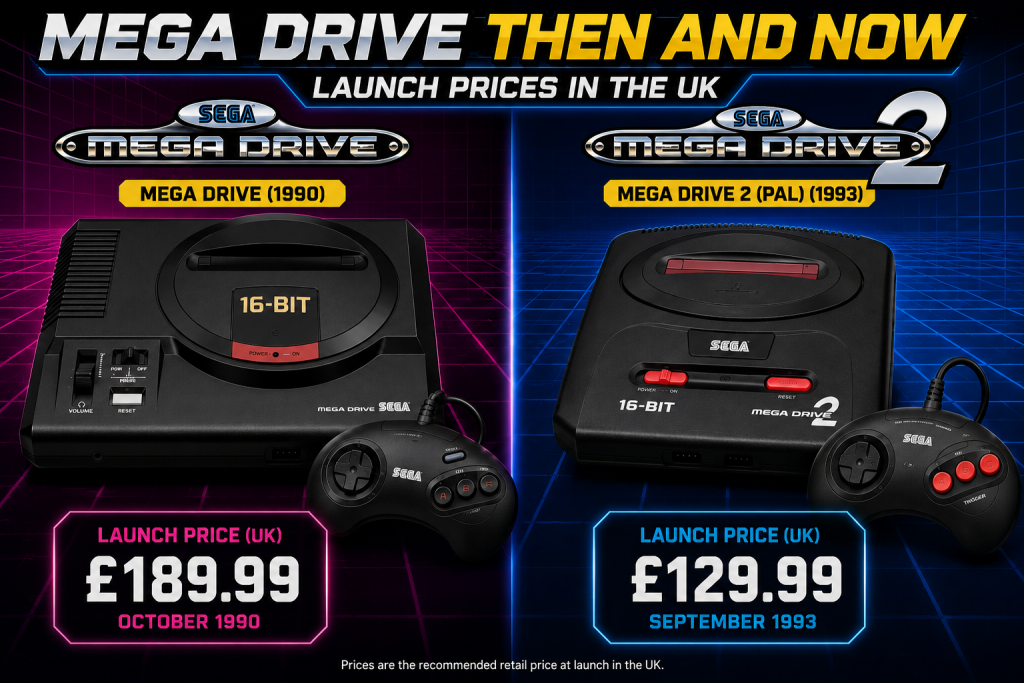
Going back further you would also see console manufacturers releasing cost-reduced version of systems. Think back to the Xbox 360 E, PlayStation 2 Slim, PSone, Mega Drive II and so on. This isn’t to say that we don’t see cost-reduced versions of consoles anymore, but this is usually more “under the hood” changes that save the manufacturer, and not the consumer, money.
Instead it appears that home consoles are split into a few versions – Digital Editions, Disc Editions and Pro models. Rather than one simple permanent price drop, players are faced with more choices… and sometimes more confusion. Taking a look at Sony’s PlayStation 5 shows multiple models that vary in storage amount depending on when they were purchased, some with disc drives, some without that can be upgraded at a later date, and some that will never be compatible with a disc drive. Oh and of course there’s a Pro model available with and without a disc drive.
In all this means Sony has five main offerings of the PlayStation 5 not counting minor alterations, storage configurations or limited editions. All of this causes confusion and instead of the price reductions seen in previous generations, prices have even gone the other way. For example, Sony raised PS5 prices multiple times in several regions during this generation. Something that would have felt almost unthinkable in earlier console eras.
Games themselves cost more now
Hardware isn’t the only thing hitting wallets harder. For years, $59.99/£49.99 was the standard price for a big-budget new release. This generation changed that, with many major publishers moving to $69.99/£69.99 for new AAA games. Some companies have even experimented with higher prices for deluxe editions and premium releases.
Of course, gaming has always been expensive in some ways. Retro fans will remember certain cartridge games in the 90s costing an absolute fortune, especially on systems like the Neo Geo AES. To alleviate these costs many gamers could be patient. Many of the best selling games would get a budget re-release as a ‘Greatest Hits’ or ‘Platinum’ range, typically for around £19.99. But it appears that these ranges have been phased out, mainly due to digital store fronts.
These storefronts are seen as an evergreen source of sales for both publishers and the system manufacturers. This in turn help to maintain the higher costs of the physical versions. Just look at Mario Kart 8 Deluxe or Breath of the Wild maintaining their current £54 price point 9 years after release!
Add on top of the cost of games the burden of players dealing with season passes, DLC, microtransactions, subscriptions, and collector’s editions. It’s no longer just about buying the console and a few games.
Inflation plays a big role
There’s an important bit of context that often gets overlooked when comparing generations: inflation.
While we touched on it earlier, A $399/£399 console in 2013 isn’t equivalent to $399/£399 today. When older consoles are adjusted for inflation, some of them actually end up looking surprisingly expensive. Many will point to modern consoles being more powerful than their predecessors – but this has been the case with every console generation to the next. Although it is worth knowing that since 2020 inflation has accelerated since the 2010s. Add component shortages and AI companies gobbling up the few vital components produced, it’s a miracle consoles are even being built.
Why gaming feels more expensive
So it is clear that there isn’t one single reason gaming costs more now. It’s a complex mix of several things happening at once:
- More advanced hardware requiring expensive components that are in short supply
- Longer and more costly game development cycles pushing game prices higher
- Inflation and currency fluctuations due to uncertain world events
- Growing reliance on subscriptions and digital services
- Publishers pushing premium editions and add-ons to extract more from each gamer
Even if the base console price doesn’t seem wildly different from previous generations. The overall cost of staying involved in gaming has definitely grown.
Is there any good news?
Thankfully, there are still ways to save money.
Waiting later into a console generation can still lead to better bundles and occasional discounts. Especially on the second-hand market. Subscription services can offer good value if you play a lot of games, even if their prices have gone up recently. Most non-Nintendo Physical games also tend to drop in price fairly quickly compared to their digital versions outside of sales.
Additionally the explosion of indie developers and titles means there’s a huge choice for the more budget conscious gamers. Especially those who enjoy retro-styled titles.
In some ways, gaming has always been an expensive hobby. The difference now is that the costs feel more constant. Instead of one big purchase every few years, modern gaming often feels like an additional steady stream of smaller expenses that quietly build up over time.
And honestly, that’s probably why so many retro gamers enjoy going back to older systems — once you owned the console and the cartridge, that was usually it.
Disclaimers
Some links in this article may be affiliate links, and purchases made through them help support and keep Retro Ages running at no extra cost to you.
AI tools were used during the creation of this article, including for research assistance and visual elements. All ideas, fact-checking, editing, and final written content were reviewed and created by a real person.